Rust secret mountain base guide shows how a tiny hidden 1x2 survives a full wipe without a single raid
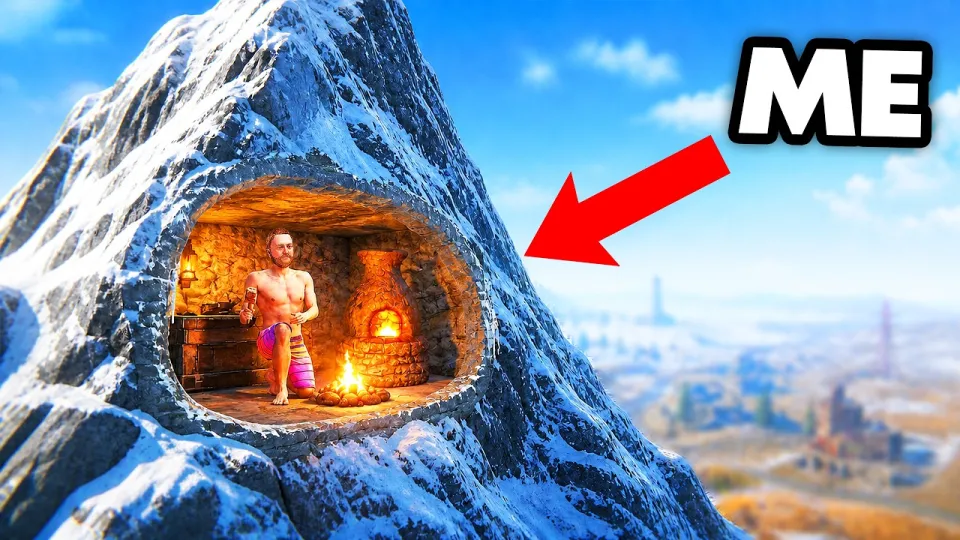
Video: I Lived in a Secret Mountain Base in Rust
You can order the same kind of articles for your own video to boost it on YouTube and Google. Just message the Telegram bot @sat_sit_bot. The bot writes and publishes the articles itself (with your YouTube video embedded) on popular topical websites (no ads). Your first 50 articles are free.
· based on the channel Memeio
A secret mountain base in Rust works when you stop trying to build a fortress and start building something the terrain already hides. The idea is a tiny 1x2-style structure placed into rock and slope so that its silhouette, colour and roof line blend into the mountain instead of rising above it. Done right, the base costs almost nothing to maintain, holds a solo player's loot for a full wipe, and never shows up on a raider's list of obvious targets. The approach is the backbone of the «I Lived in a Secret Mountain Base in Rust» run on the Memeio channel, and you can follow the creator's other projects through his X account.
What a secret mountain base in Rust actually is
A secret mountain base is a low-cost, minimum-size structure built into terrain features — cliff pockets, slope shelves, rock overhangs — where the environment does the concealment work. It is not a bunker and not a compound: it is usually one or two foundations of living space with a door, a small box room and a sleeping bag, sized so that nothing sticks out above the surrounding rock. The whole point is that a passing player, even one scanning the ridge line, reads the shape as part of the mountain rather than as a build. That is why the concept scales so well for solos: you are trading defence in depth for the chance that nobody ever finds the door.
Terrain camouflage beats any wall you can craft
Camouflage in Rust is a geometry problem before it is a colour problem. A 2x2 sitting on a bare summit is visible from three grid squares away no matter what material you skin it with, while a smaller box wedged under an overhang can be invisible from the valley floor entirely. Practical rules that make the difference:
- Build below the ridge line, never on top of it — skyline silhouettes are the first thing experienced players check.
- Use the rock as a wall: place foundations so at least two sides are buried in terrain and only the door face is exposed.
- Match materials to the biome — stone against grey cliff, wood against dirt and brush — and avoid sheet metal or high-quality metal skins that catch light.
- Keep the roof flush with the slope so no flat plane reflects the sun.
- Skip external lights, furnaces and wind turbines; a glowing base at night is a beacon, and a turbine blade spinning on a ridge is visible from further than the base itself.
A useful sanity check is to walk 100–150 metres downhill, turn around and look up. If you can pick your own base out in under five seconds, so can a raider with a bolt-action rifle and too much free time.
Why the smallest possible footprint wins the wipe
The strongest raid defence in Rust is not being raided, and the cheapest way to achieve that is to need almost nothing. A 1x2 with a single sheet-metal door and a handful of boxes costs a fraction of what a multi-tool-cupboard compound demands, which means:
- upkeep stays low enough that a solo player can pay it from a few farming runs;
- losing the base costs you a kit and some scrap, not a wipe's worth of progress;
- you can rebuild in a new pocket of the same mountain within an hour;
- there is less surface area to honeycomb, so you spend resources on tools and weapons instead of walls.
That last point is the real trade. Every stone you do not spend on a third layer of walls is stone you can put into a raid or a fight, and a small hidden base lets you keep your entire economy mobile. The counter-argument is equally real: a base this small has no fallback. If someone does find it, one decent explosive charge ends the run, so the design only pays off when the location is genuinely good.
Cheap eco-raiding tricks that stretch a solo's resources
A hidden base is only half a strategy; the other half is being able to punch above your weight with primitive gear. One of the most underused tricks is spear recycling: broken wooden spears can be turned back into stone spears, effectively doubling the number of throwing weapons you get out of the same amount of stone. Keep the broken spears ahead of the intact ones in your inventory so you can craft without shuffling slots mid-fight. Beyond that, the standard solo toolkit applies — bows for soft targets, spears for doors and wooden structures, and a stash of low-tier explosives saved for the moment you find a base worth the investment. Eco-raiding is about converting cheap, replaceable materials into damage, and it pairs naturally with a base that costs almost nothing to replace.
Why so many «hidden» Rust bases get found anyway
The gap between a base that survives a wipe and one that gets raided on day two is usually location discipline, not build quality. The classic failure is a 2x2 planted on a mountain peak fifteen metres from two other bases — technically remote, practically a landmark. Common giveaways:
- Traffic: popular monument routes, spawn beaches and clan highways get walked constantly; a quiet corner of the map does not.
- Skyline: anything breaking the ridge line is visible from a distance, especially at sunrise and sunset.
- Noise and light: doors slamming, furnaces burning and gunfire echoing off rock carry further than players expect.
- Habit: using the same mountain every wipe means the regulars on the server already know where to look.
- Cheaters: aimbots and ESP remove the advantage of concealment entirely, which is the one variable a builder cannot control.
A good test before you commit is to spend ten minutes watching the spot from a distance. If two players walk past in that window, the location is busy, and busy means found.
What the community reaction says about hidden-base videos
Viewer discussion around this style of Rust content tends to split into three camps, and each one points at a real design lesson. Some viewers laugh at how visible a supposedly secret base actually is from certain angles, which is a fair reminder that concealment is relative to the viewer's position. Others share their own stories of tiny bases that survived for years on official servers — a 1x2 tucked into a waterfall gap, for instance — confirming that the concept works when the terrain genuinely hides the structure. A third group simply enjoys the survival format without playing Rust at all, which is why the mountain-base run works as entertainment even for people who never intend to build one. The recurring theme across all three is the same: location first, materials second, walls last.
Useful links
- Memeio on X — updates, clips and announcements from the creator.
- Epidemic Sound — the music library credited for the video's soundtrack.
The takeaway for your next wipe
A secret mountain base in Rust is a discipline rather than a blueprint: pick terrain that hides a 1x2, keep the footprint and the upkeep minimal, and spend the saved resources on eco-raiding gear instead of walls. Camouflage is geometry and light, not a skin, and the fastest way to lose a hidden base is to build it somewhere other players already walk. The approach shown in Memeio's mountain-base run is a useful template for solos who would rather never be raided than win a defence. If you want to follow what the channel does next, the creator's updates land on X.
Key takeaways
- The base concept is a minimal 1x2-style structure tucked into mountain terrain instead of a fortified compound
- Camouflage comes from matching stone and wood to the rock, not from building higher or bigger
- A small footprint keeps upkeep low, so a solo player can hold the base through a full wipe cycle
- Cheap eco-raiding matters: broken wooden spears can be recycled into stone spears for extra damage
- The main failure point is visibility from above and nearby player traffic, not the base design itself
Source: I Lived in a Secret Mountain Base in Rust · Markdown version
Questions & answers
Is a 1x2 actually safe in Rust, or does it just get raided immediately?
A 1x2 survives on concealment and low value, not on durability. If nobody finds the door, it can last a full wipe on low- and mid-population servers. Once it is discovered, one explosive charge usually ends it, so the location has to be genuinely remote and off the main traffic routes.
How do I stop my mountain base from being visible on the skyline?
Build below the ridge line and let rock or slope cover at least two sides of the structure. Keep the roof flush with the terrain and avoid reflective materials, external lights and wind turbines. Check the result from 100–150 metres downhill — if you can spot it in seconds, so can a raider.
What is the spear recycling trick in Rust?
Broken wooden spears can be used to craft stone spears, so a stack of damaged spears effectively doubles your supply of throwables for the same amount of stone. Keep the broken ones ahead of the intact ones in your inventory so crafting does not require reshuffling slots during a fight.
Why do experienced players say location matters more than walls?
Because a hidden base removes the raid before it starts, while walls only decide how many explosives the raider needs. A cheap, invisible 1x2 costs almost nothing in upkeep and lets a solo player keep resources for gear and eco-raids. The main risks left are heavy player traffic and cheaters using ESP, neither of which extra walls solve.